
Administrative Publication · Metropolitan Destination Framework
San Antonio, Texas: What to Do, Where to Eat and Where to Sleep?
Issued by the Editorial Office, ESTA PORTAL US ONLINE · Senior Administrative Adjudicator Review
Introduction
San Antonio Texas constitutes a major cultural, historical, and tourism destination within the United States and ranks among the most populous municipalities in the State of Texas. The present publication is issued in order to facilitate accurate procedural understanding of the major attractions, accommodation categories, dining districts, transportation logistics, visitor planning considerations, and entry documentation requirements applicable to the Subject contemplating a visit to San Antonio Texas during the 2026 calendar year.
[Official Advisory]
Interstate visitor activity remains subject to applicable entry authorization requirements, identity documentation obligations, and immigration compliance standards where international entry is involved.
Understanding San Antonio Texas
San Antonio is situated within Bexar County in south-central Texas, approximately equidistant between the Mexico–United States international border and the State capital of Austin. Historical significance of the municipality is associated with the Spanish colonial mission system established during the eighteenth century, the Texas independence-era engagement at The Alamo of 1836, and the subsequent development of the metropolitan area as a centre of regional commerce.
Economic importance is reflected in the concentration of military installations administered by the U.S. Department of Defense, the health-sciences sector, the financial services sector, and the tourism sector. Tourism infrastructure encompasses an extensive inventory of accommodation, an integrated convention centre, designated cultural districts, and continuous visitor information services administered by the City of San Antonio.
Transportation accessibility is supported by San Antonio International Airport, regional and interstate highway connections, and integrated public transportation administered by VIA Metropolitan Transit. Visitor demand for San Antonio Texas is sustained throughout the year, with concentrations during festival periods, academic break intervals, and the temperate seasons. The present San Antonio Travel Guide is intended to facilitate planning of Things to Do in San Antonio in accordance with administrative and logistical considerations.
Why San Antonio Remains Popular in 2026
Selection of San Antonio Texas as a visitor destination is associated with several objective factors. Historical attractions include sites of national significance documented within the United States historical record, foremost among which is The Alamo. Cultural diversity is reflected in the demographic composition of the metropolitan area and is documented in the cuisine, festivals, and institutional collections of the municipality.
Family-oriented destinations include theme park, zoological, and educational institutions distributed across the metropolitan area and adjacent regions. Culinary reputation is associated principally with Tex-Mex cuisine and with the regional barbecue tradition of central Texas. Accessibility for domestic and international visitors is facilitated by the international airport, the metropolitan road network, and the established tourism infrastructure of the downtown core.
Things to Do in San Antonio
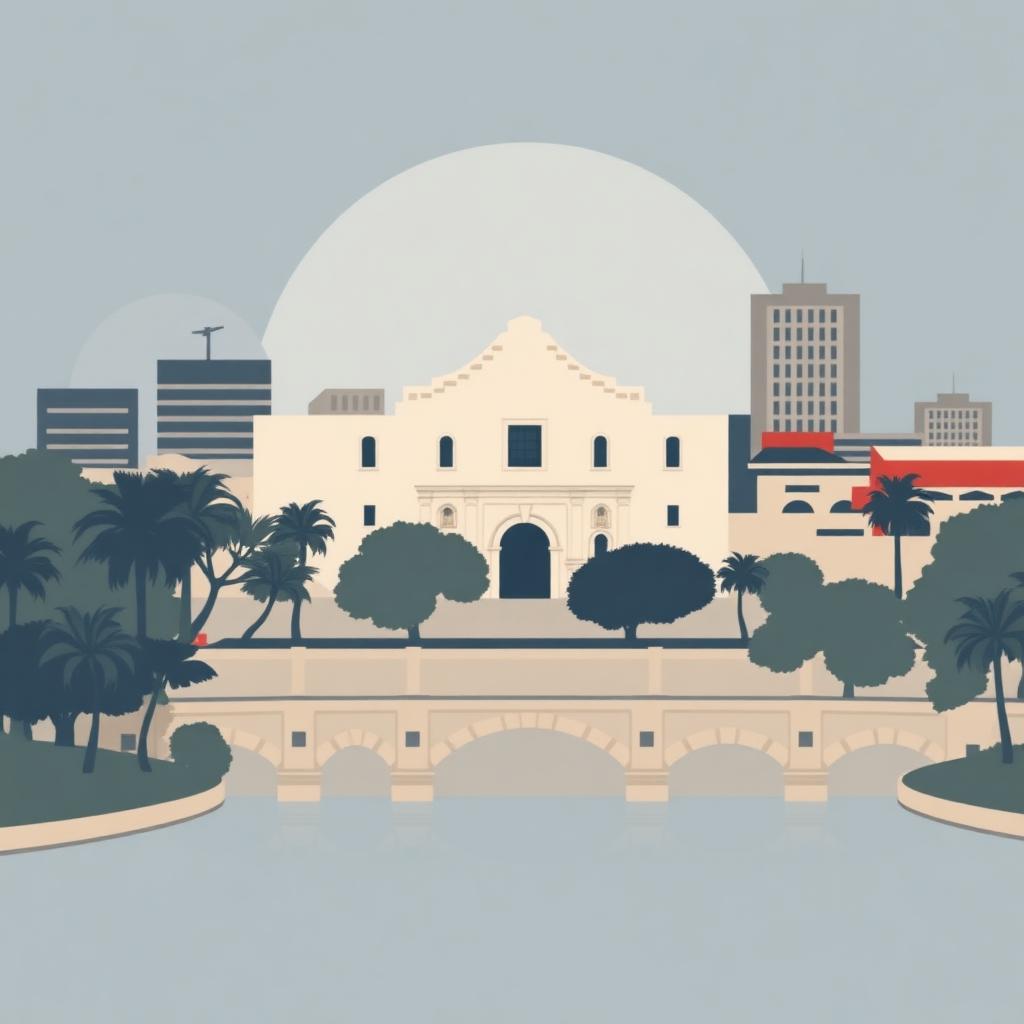
The Alamo. The Alamo, designated as a UNESCO World Heritage component within the San Antonio Missions inscription and administered by the General Land Office of the State of Texas, constitutes the site of the 1836 engagement of the Texas Revolution. Visitor considerations include conformity with the dress and conduct standards established for the site. Transportation access is by pedestrian movement from the downtown core. Planning recommendations include reservation of timed entry where required.
San Antonio River Walk. The River Walk is a pedestrian network situated one level below the principal street grid of downtown San Antonio, extending along the San Antonio River. Visitor considerations include the linear configuration of the corridor and the concentration of dining establishments. Transportation access is by pedestrian movement and by municipally-operated river barge services.
San Antonio Missions National Historical Park. The San Antonio Missions National Historical Park, administered by the National Park Service, encompasses four Spanish colonial missions situated south of the downtown core. Visitor considerations include observance of the visitation hours established for each unit. Transportation access is by private vehicle, rideshare, or the dedicated mission reach segment of the River Walk extension.
Tower of the Americas. The Tower of the Americas, situated within HemisFair Park, provides an elevated observation facility of the downtown core. Visitor considerations include admission timing. Transportation access is by pedestrian movement from the convention centre district.
Market Square. Market Square is a designated commercial and cultural precinct documenting the Mexican-American heritage of the municipality. Visitor considerations include conformity with operating hours and observance of festival schedules.
Japanese Tea Garden. The Japanese Tea Garden, situated within Brackenridge Park, constitutes a landscaped public garden of historical significance. Visitor considerations include conformity with conduct standards established for the garden. Transportation access is by vehicle or rideshare from the downtown core.
San Antonio Museum of Art. The San Antonio Museum of Art, situated along the Museum Reach extension of the River Walk, maintains substantial collections of significant institutional character. Visitor considerations include reservation of admission during peak periods.
Natural Bridge Caverns. The Natural Bridge Caverns, situated north of the metropolitan area, constitute a designated natural attraction administered by a private operator. Visitor considerations include reservation of guided admission. Transportation access requires private vehicle or rideshare.
Historic Sites and Cultural Attractions
Colonial heritage within San Antonio is documented at the four mission units of the San Antonio Missions National Historical Park and at The Alamo. The mission system history extends from the establishment of Mission San Antonio de Valero in 1718 through the secularisation of the missions during the late eighteenth and early nineteenth centuries, and is documented through interpretive infrastructure administered by the National Park Service.
Cultural districts include the King William Historic District, the La Villita Historic Arts Village, and the Market Square precinct. Museums of significant institutional character include the San Antonio Museum of Art, the McNay Art Museum, and the Witte Museum. Public landmarks include the San Fernando Cathedral and the Bexar County Courthouse, each of which is documented within registers maintained by the Texas Historical Commission.
Family-Friendly Destinations
SeaWorld San Antonio is a designated theme park combining marine animal exhibits with mechanical attractions. Visitor planning considerations include reservation of admission, allocation of a full operational day, and observance of parking and entry procedures.
Six Flags Fiesta Texas is a designated theme park situated within the metropolitan area. Visitor planning considerations include reservation of admission, conformity with height and eligibility standards applicable to individual attractions, and observance of seasonal operating schedules.
San Antonio Zoo, situated within Brackenridge Park, maintains a zoological collection accessible subject to standard admission. Visitor planning considerations include early arrival during peak periods.
Witte Museum is an institution documenting natural history, regional history, and cultural subjects, and incorporates installations suitable for visitors of varying age categories.
Morgan's Wonderland is a designated accessibility-oriented theme park developed in conformity with universal-design standards. Visitor planning considerations include reservation of admission and conformity with accessibility-related operational protocols.
Dining Areas and Local Cuisine
River Walk Dining District. The River Walk corridor incorporates a concentrated inventory of dining establishments, characterised by waterside seating and a wide range of culinary categories. Visitor demand is sustained throughout the year. Reservation is recommended during peak periods.
Pearl District. The Pearl District, situated north of the downtown core within a redeveloped historic brewery complex, constitutes a contemporary dining and accommodation precinct. Visitor demand is elevated. Reservation is required at multiple establishments.
Downtown Restaurants. Downtown restaurants outside the immediate River Walk corridor constitute an extensive category and include institutional dining facilities associated with convention centre operations.
Market Square Food Areas. Market Square incorporates dining infrastructure of regional character, including establishments documenting Mexican-American culinary traditions.
Local Tex-Mex Cuisine. Tex-Mex cuisine, a culinary tradition of regional origin, is widely available across the metropolitan area. Reservation considerations vary by establishment, with higher-demand locations requiring advance booking during peak periods.
Accommodation Options
Downtown Hotels provide proximity to The Alamo, the convention centre, and the principal cultural attractions. Planning considerations include elevated tariffs during convention periods.
River Walk Hotels provide direct access to the River Walk corridor and to the associated dining and pedestrian infrastructure. Planning considerations include limitations of parking capacity at certain properties.
Luxury Accommodations are distributed principally within the downtown and Pearl District precincts. Planning considerations include the requirement for advance reservation during peak periods.
Mid-Range Properties are distributed across the metropolitan area and provide an intermediate combination of accommodation quality and tariff. Planning considerations include validation of accessibility to public transportation or rideshare services.
Budget-Friendly Lodging is distributed across peripheral districts and along principal interstate corridors. Planning considerations include incorporation of transportation costs into the aggregate budgetary calculation.
Family Accommodations include properties incorporating multi-room configurations, pool facilities, and proximity to family-oriented attractions. Planning considerations include reservation of appropriately configured units in advance of arrival.
Transportation and Mobility
San Antonio International Airport is situated within the metropolitan area and is served by domestic and international carrier services. Public transportation administered by VIA Metropolitan Transit includes a network of bus routes, supplemented by downtown circulator services. Rideshare services and conventional taxi services are available throughout the metropolitan area.
Vehicle rentals are administered by national operators with locations at the airport and at downtown facilities. Downtown walkability is favorable within the area encompassing The Alamo, the River Walk, and the convention centre. Regional transportation connections include interstate highway corridors providing access to Austin, Houston, and the international border at Laredo and Eagle Pass. Logistical planning requirements include allocation of sufficient time for inter-attraction transit during peak hours.
Suggested Three-Day Itinerary
Day One — The Alamo and River Walk
Day one is configured for visitation of The Alamo, walking the principal segment of the River Walk, and inspection of the historic downtown district. The itinerary may incorporate ascent of the Tower of the Americas during the afternoon and dining within the River Walk corridor during the evening.
Day Two — Missions, Museums and Cultural Districts
Day two is configured for visitation of the San Antonio Missions National Historical Park, with inspection of one or more of the museum institutions of the metropolitan area during the afternoon, and dining within the Pearl District during the evening.
Day Three — Family Attractions, Outdoor Destinations and Shopping
Day three is configured for visitation of one of the principal family attractions, time at an outdoor destination such as Brackenridge Park or the Japanese Tea Garden, and inspection of the shopping districts of the metropolitan area during the afternoon and evening.
Seasonal Considerations
Spring (March through May) is characterized by moderate temperatures, elevated visitor volume associated with the annual Fiesta San Antonio celebration in late April, and generally favorable outdoor visitation conditions. Planning considerations include advance reservation during festival periods.
Summer (June through August) is characterized by elevated temperatures and humidity, sustained visitor volume, and peak demand at family-oriented attractions. Planning considerations include allocation of midday intervals to indoor or shaded environments.
Autumn (September through November) is characterized by moderating temperatures, reduced peak-season visitor volume in September, and elevated visitation during the Dia de los Muertos period in late October and early November. Planning considerations include monitoring of event schedules.
Winter (December through February) is characterized by mild temperatures relative to northern jurisdictions, reduced visitor volume outside the December holiday period, and the operation of the Holiday River Walk illumination installation. Planning considerations include advance reservation during the December holiday window.
Budget Planning Considerations
Accommodation costs vary materially with district, category, and seasonal demand, with downtown and River Walk properties generally situated at the upper portion of the range during festival and convention periods. Transportation expenses are determined by the modal mix elected and by airport-to-accommodation transit cost. Attraction admission fees vary across institutional and theme park categories, with theme parks situated at the upper portion of the range.
Dining expenditures vary with the dining district, the category of establishment, and reservation conditions. Seasonal price variations are particularly notable in respect of accommodation tariffs during festival, convention, and major holiday periods. Reference values for budgetary planning may be obtained from publications issued by the City of San Antonio Department of Convention and Sports Facilities and from the visitor information services of the municipality.
Common Visitor Planning Errors
Insufficient accommodation planning. Failure to reserve accommodation in advance during festival, convention, or major holiday periods may result in unavailability within preferred districts and require accommodation at peripheral locations.
Ignoring seasonal weather conditions. Failure to incorporate prevailing seasonal conditions into the itinerary, particularly during summer, may result in compromised visitor experience and heat- related events.
Underestimating transportation times. Failure to allocate sufficient time for inter-attraction transit during peak hours may result in compression of the itinerary and missed reservations.
Failure to reserve attractions. Failure to reserve admission at attractions operating reservation systems may result in denial of entry on the day of intended visitation.
Missing entry documentation requirements. Failure to obtain an approved ESTA authorization or an appropriate Authorisation Credential prior to undertaking the Entry Authorization Process precludes admission to the United States and accordingly precludes visitation of San Antonio Texas.
International Visitor Documentation Requirements
Passport requirements include possession of a valid passport conforming to the technical standards prescribed for international entry. ESTA authorization requirements apply to nationals of jurisdictions designated under the Visa Waiver Program. Entry documentation obligations include presentation of the passport, the associated authorization record, and such supporting documentation as may be requested by the inspecting officer.
Border inspection procedures are conducted by U.S. Customs and Border Protection at the designated port of entry and yield the final admissibility determination. Authorized stay considerations include the ninety (90) day maximum period of stay per discrete admission applicable under the Visa Waiver Program. The Subject is required to conform with all conditions established at the port of entry throughout the duration of the visit to San Antonio Texas.
Administrative Compliance Standards
Entry authorization requirements include possession of an approved authorization issued under the appropriate framework. Identity verification procedures are administered through inspection of the passport, biometric capture where required, and validation against databases maintained for security and immigration purposes.
Immigration compliance obligations include observance of the authorized period of stay, conformity with the declared purpose of admission, and adherence to all conditions established at the port of entry. Documentation integrity requires accurate, current, and consistent presentation of authorization records at all points of inspection. Transportation regulations include conformity with road traffic regulations applicable within the State of Texas and with operator-specific requirements applicable to rental vehicles and rideshare services. Visitor conduct requirements include conformity with applicable municipal ordinances, attraction- specific regulations, and law enforcement directives.
Access Official Submission Resources
Applicants seeking administrative guidance regarding San Antonio Texas travel planning, Things to Do in San Antonio involving international entry procedures, San Antonio Travel Guide documentation requirements, and United States entry authorization protocols may access the ESTA PORTAL US ONLINE submission environment for procedural reference and application processing information.
Frequently Asked Questions
References
- National Park Service — administration of the San Antonio Missions National Historical Park.
- City of San Antonio — municipal visitor information and convention administration.
- Texas Historical Commission — registers and historical interpretation programs.
- U.S. Customs and Border Protection — port of entry inspection and admissibility determinations.
- U.S. Department of State — consular Authorisation Credential framework and international visitor information.
Related administrative publications:
Administrative Conclusion
San Antonio Texas planning considerations encompass selection of accommodation districts, conformity with seasonal and event-related considerations, and discharge of the documentary obligations applicable to international visitors. Things to Do in San Antonio span historic, cultural, family-oriented, and outdoor categories and are distributed principally within the downtown core and adjacent districts.
Accommodation and transportation logistics include availability across multiple tariff categories and integrated public and private transportation infrastructure. Entry documentation requirements include a valid passport, an approved ESTA authorization or an appropriate consular Authorisation Credential, and supporting documentation sufficient to substantiate the declared purpose of admission. Immigration compliance obligations include conformity with the authorized period of stay, observance of permissible entry purposes, and adherence to all conditions established at the port of entry by U.S. Customs and Border Protection.
